

Memories in bloom
Flowers can be messages from those we loved and lost

Every year in late spring, my mother would walk into the house from our backyard and say with satisfaction, “The bride is in bloom.”
The bride was not a person, but a bush heavy with white flowers that would appear as the weather warmed in our tiny, urban backyard. Also called the pearl bush, the flowers cluster on branches which bend downward, looking like a bridal veil.
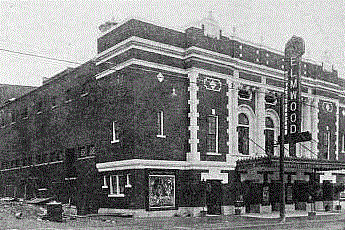
My mother was a skilled gardener, but the location of our house on the west side of Buffalo fought her at every turn. When she and my father bought the Victorian-era structure the yard ended at the red brick wall of a movie theater behind our house. Yet the wall lent the plot of land an intimate feel, like a hidden courtyard. It muffled the constant traffic noise of nearby Elmwood avenue, with its wheezing buses and shrieking ambulances.
Alas, in less than two years the Elmwood Theater was torn down to make way for a bank parking lot. The brick wall was replaced by a chain link fence. The view was unremittingly ugly. In summer the asphalt radiated heat. In winter it was covered in drifts of snow that eventually became black with dirt, salt and sand.
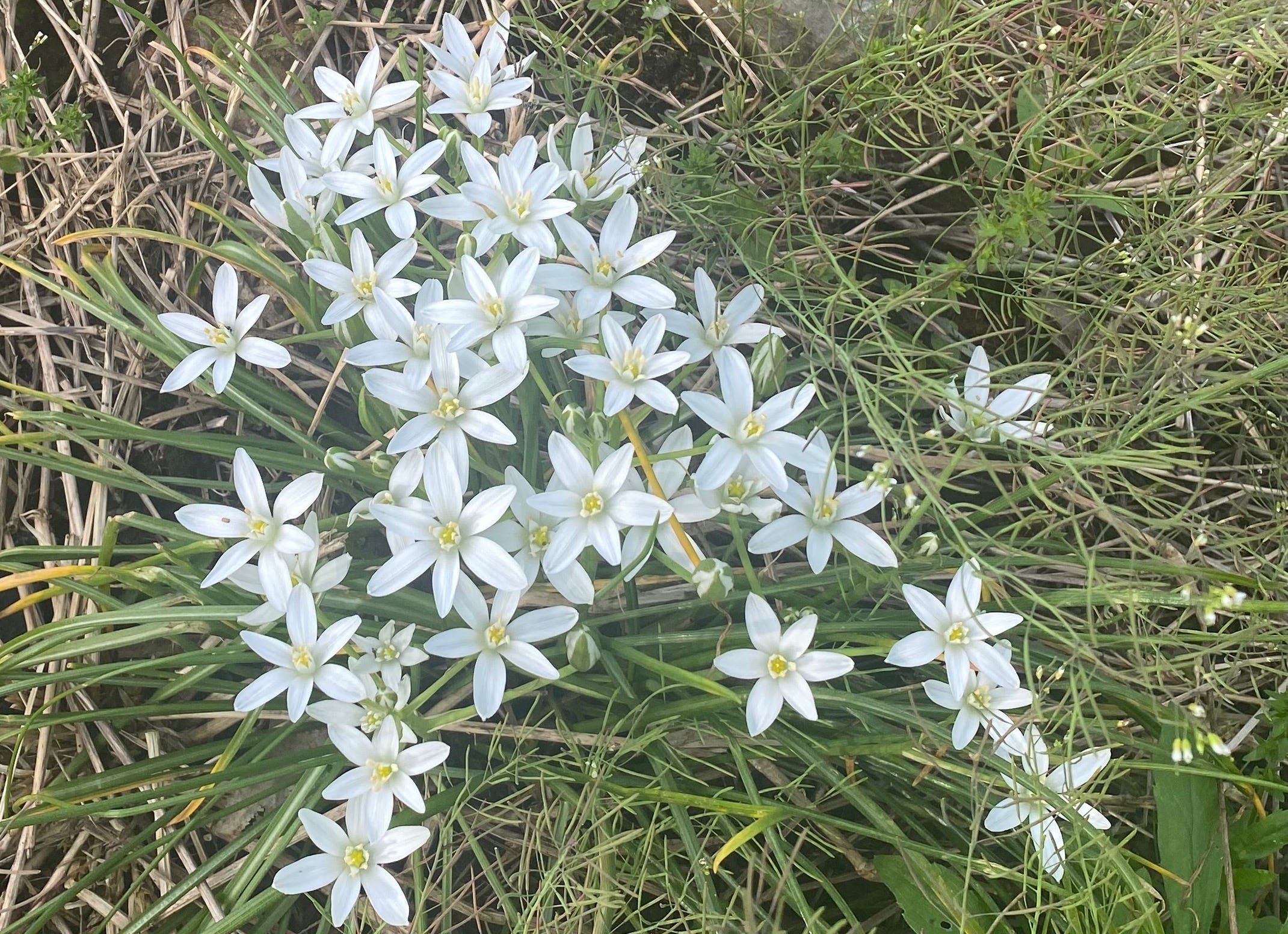
Still my mother tried to wrest some beauty from the yard. She had my two brothers and our father get flagstones from a dilapidated mansion a few blocks away that itself was slated for the wrecking ball. They did, but the flagstones mostly sat in piles at the end of the driveway. None of us made it a priority to help her complete her vision for the yard. But she persisted in her efforts. She planted tulips, lilies of the valley and hyacinth. Together she and I went into the backyards of once-grand homes, now abandoned and falling apart, and dug up bulbs of Stars of Bethlehem, replanting them in the yard. Mom planted two Kwanzan cherry trees. In spring, their branches were covered in double pink blossoms, reaching up like they were glad to see us.

Yet we kids never used the yard much. It was too small for games. The view was grim.
The years passed. So did my mother, then my dad. My sister Ellen insisted on buying the house when Dad died. It was a money pit. Dad never maintained it. That neglect showed. I always thought Ellen bought the place because she wasn’t ready say goodbye to our parents. But in four years she would see them again. When Ellen’s estate sold the house it was slated to be torn down for yes, another parking lot, this time for a nearby bar. I visited the house once again to dig up some bulbs before the entire lot was paved over.
That’s when I could see it, in the spring sunshine, from an upstairs window: The outline of a Japanese rock garden. Mom must have planned it all along and there it was: The Japanese cherry trees, a riot of pink; the bride in full bloom, blossoms cascading and nearby, the stacked-up piles of flagstone. Why hadn’t we made it a priority to take an afternoon, buy some sand, do some digging and imbed the flat stones in the garden? Mom asked nothing for herself and it would have given her so much joy. The thoughts haunted me as I dug up the Stars of Bethlehem. The flowers could not quell regret, but they had become a form of remembrance.
I planted the Stars of Bethlehem around our rural home, but to my disappointment, they never bloomed. A few months later I suffered a miscarriage. It was spring. I bought the biggest bleeding heart bush I could find and planted it to comfort my own bleeding heart. The bush grew bigger every year.
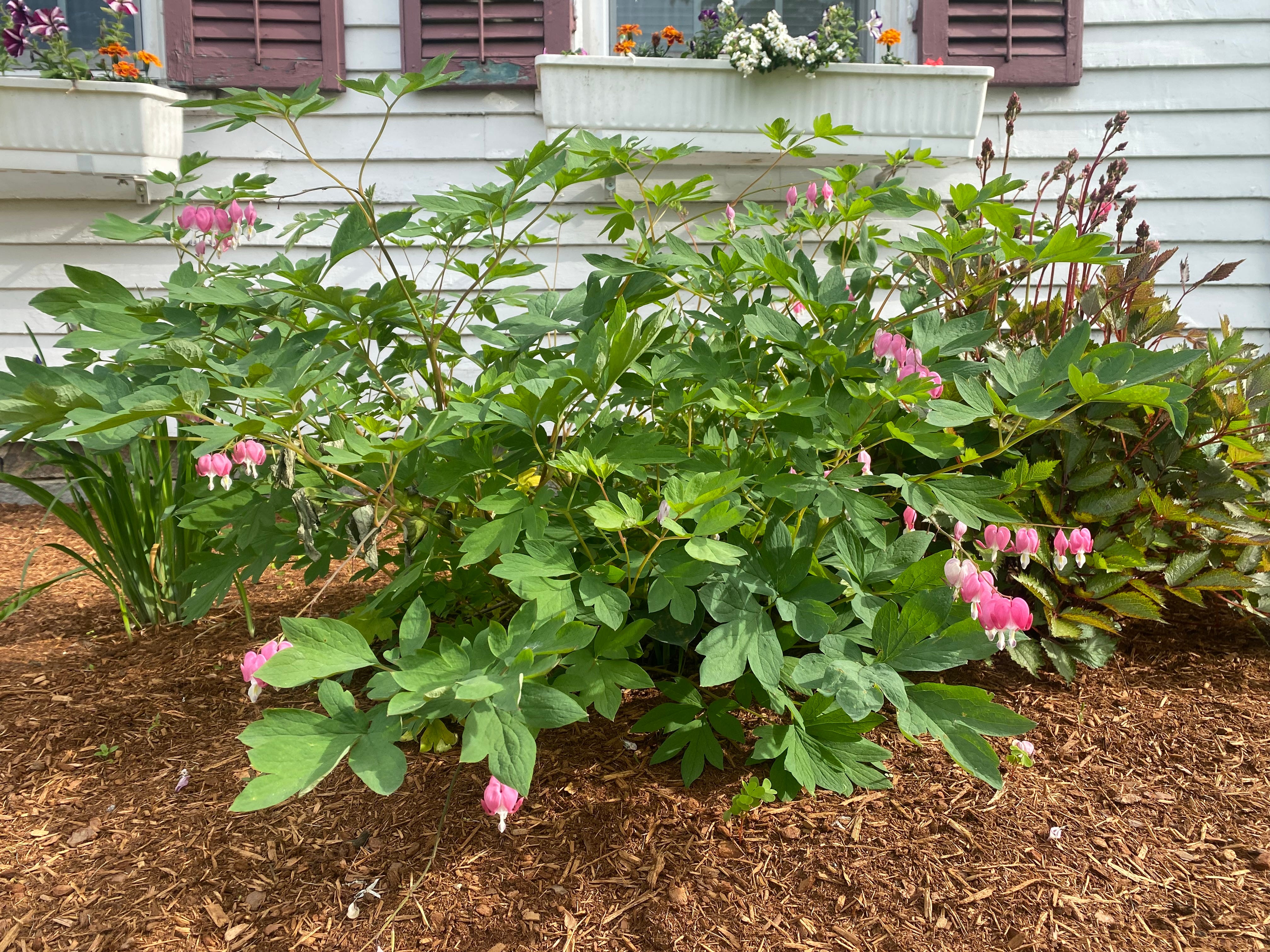
When we sold our house and moved midwinter, I dug up the bush and the soil around it, and replanted it at our new home on a quiet country lane.
As the weather thawed, the bleeding heart branched out and bloomed, content in its new environment. And, somehow, the Stars of Bethlehem appeared, too, as if my mother wanted to send comfort.
Every spring, scattered in the grass, Stars of Bethlehem now bloom in unexpected places. I think of them as my mother waving to me. “Hi, Mom!” I say, as I admire them.
And the bleeding heart? I have split and replanted the original many times now, dividing it in fall and giving some away to friends. This month, all the bushes in front of the house and in our backyard bloomed once again. There are six of them now, 34 years after I brought the mother plant home.
When I see them, I smile, touch the delicate flowers and I whisper, “Hello, love. I haven’t forgotten you.”
You garden memories touched me deeply. I’m taking a moment before I go to tend my mother’s garden. She has said once she passes away she hopes we remember her for her flowers. We will remember her for much more than her pretty, neat garden but while she is still with us, I’ll do all I can to keep it blooming inspite of aphids, deer, moles and rabbits…. Japaneses beetles and boxwood mites. Seems like more pests get added to the list every year. Today we marveled at the father house finch as he bravely flew in repeatedly to feed 4 hungry hatchlings directly under mom’s awning, 6 feet away from us. At 92, mom is needing our help every morning and evening. Some days she is so uncomfortable she prays to be taken soon. Most days she is perky and grateful by 3:00, after resting and all her meds. I am grateful every day to still have her wisdom and smile. She always was in kitchen when we would visit as adults. Mom would drop everything and run to the door to greet me. I always felt like the most special person in the world. I am so grateful to be pulling weeds, watering daily and getting my hands dirty while she enjoys the devoted father house finch!
It is very intriguing to consider those things we carry with us as reminders of those who have gone before us: flowers, recipes, photographs, journals. I've been thinking a lot about this lately because I just entered the cusp before age 80. I think we should think about our lives in three realms that also encompass past, present and future: Knowledge, Celebration and Inspiration. We need to strive to know what is our history, we need to find ways to celebrate especially what has been overlooked and ignored but is so very important, and we need to find the best ways to inspire new generations to act with this knowledge and why it truly matters.