

How America eats its young
Tax code rewards longevity, not need

In our corner of New England, my husband and I were stuck in the house for the last several days enduring, and then dealing with the aftermath of, a record snowstorm.
Since misery loves company, we spent our enforced isolation doing our taxes. Except, surprise: We experienced no misery at all. This year, we made out like bandits, with a healthy refund, the first we have gotten in years.
That’s good for us and bad for the country. It reflects a skewed national priority to give ever more tax breaks, credits and benefits to the over-65 population while making it harder and harder for younger people to keep their financial heads above water.
Our windfall this year is due in part to the unwise over-65 tax deduction of $6,000 for each elderly person passed in the Republican tax bill last year. The so-called “Big Beautiful Bill” that gave tens of billions to finance the spread of masked, anonymous immigration enforcement officers swarming our streets, inflated the bloated military budget even more and, yep, shoveled even more cash toward the elderly.
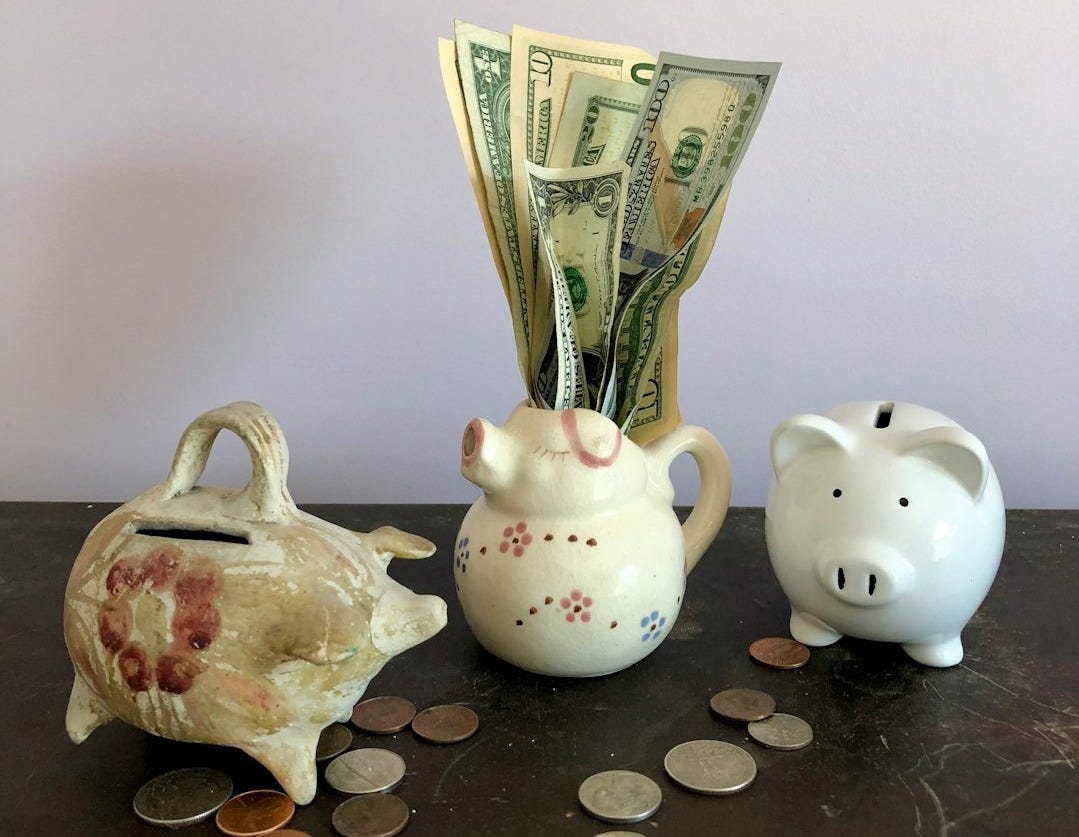
This is stupid and shortsighted. The U.S. gives younger generations very little help compared with oldsters. And the very youngest children get even less of the national largesse.
One study clearly illustrates the government’s skewed priorities: In 2019, the U.S. government spent $5,595 on programs benefiting children, but a little over $29,000 on federal entitlement programs alone for the elderly. That means for every $5 spent on retirees, $1 went to the kids.
Meantime, struggling 30- and 40-somethings are stuck with day care costs rivaling that of in-state college tuitions, student loans that rise upward with interest rates, starter homes that are unaffordable and rents that eat up half their incomes, not to mention a looming Artificial Intelligence revolution that could threaten their jobs. All with little to no help from Uncle Sugar.
Contrast it with the situation of many of my fellow geezers, as outlined in an excellent Wall Street Journal article headlined:
“Over 65? Congratulations, you own the economy.”
Americans 65 to 74 had average net worth of $1.8 million in 2022. This is a hike of 178 percent from the same age group in 1989, adjusted for inflation.
Of course, this doesn’t mean all elderly people need wheelbarrows to take their money to the bank. Plenty struggle. This is especially true of the unlucky younger Baby Boomers (the generation born between 1946 and 1964) who are just approaching retirement. Many are considerably less well off than older members of the generation who had the accident of better timing for jobs, recessions and cheap college educations. One third of younger baby boomers are facing retirement with no retirement savings, depending on Social Security alone to support them. It won’t be enough unless they have pensions to supplement their incomes – something that is increasingly rare
My biggest hope is that ever-younger voters will begin to have the last word. It used to be a snarky saying among election workers that 80 percent of 80-year-olds vote while only 20 percent of 20-year-olds did, but the younger generations may be waking up to what’s at stake.
In 2024, nearly half of 18-to-29 year-olds voted, a sign of progress, but still not enough to offset the elderly, who make up nearly one-third of all voters because their participation is so high. If that changes, look out. In the meantime, Americans will continue to have a government acting like the mythical god Saturn, eating its young.
Couldn't agree more. We've worked hard but also have been lucky. I wish my taxes were lower, but I don't need a tax break. The government should to more to help those who are struggling.
The grander truth in your article is that generally people do not understand "systems" and are myopic in their capacity to look upstream and downstream. Lacking commitment to the future of young people is an act of "cutting off your nose to spite your face."